Processed fMRI data of transcutaneous auricular vagus nerve (taVNS) stimulation in humans
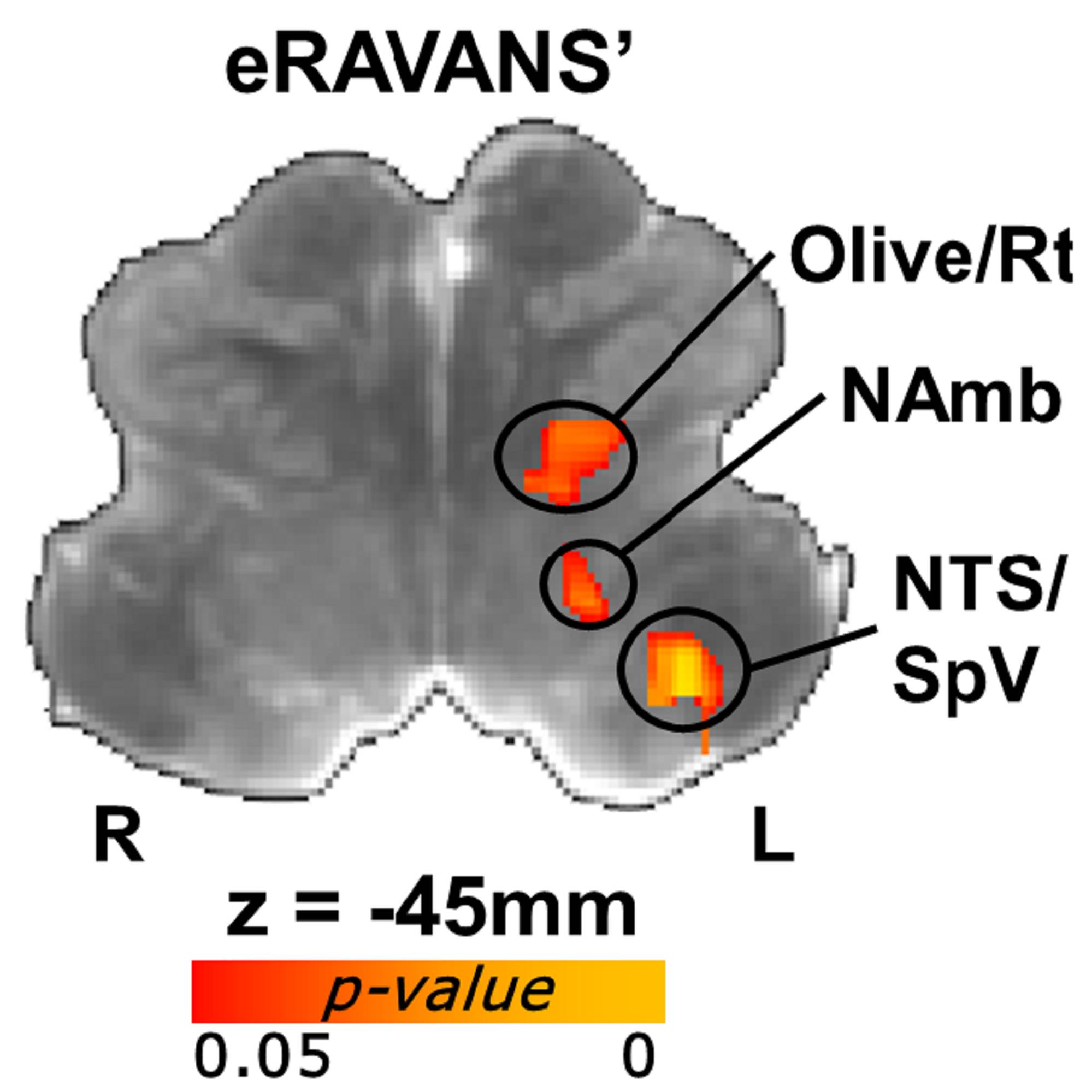
Healthy humans were scanned with ultrahigh-field (7T) fMRI to assess the brainstem response to transcutaneous auricular vagus nerve stimulation (taVNS) gated to different phases of the respiratory cycle.
Dataset Overview
Study Purpose: The goal of the study was to examine the Respiratory-gated Auricular Vagal Afferent Nerve Stimulation in the area of the auricular concha.
Data Collection: Healthy humans were scanned with ultrahigh-field (7T) fMRI to assess the brainstem response to transcutaneous auricular vagus nerve stimulation (taVNS) gated to different phases of the respiratory cycle. Scan types include: multi-echo MPRAGE and 6 GRE BOLD scans for the stimulation conditions.
Primary Conclusion: None stated
Curator's Notes
Experimental Design: Subjects were assigned to multiple experimental conditions, namely: eSham (“Rest”), iSham (“Rest_Insp”), eRAVANS (“RAVANS_Exp”), iRAVANS (“RAVANS_Insp”), and Earlobe (“RAVANS_Earlobe”).
Completeness: Part of a larger study
Subjects & Samples: Healthy human adult male (n=7) and female (n=9) subjects, ages 20 - 46 years old, were used for this study. 7T fMRI, Behavioral, Physiological/Stimulation, Stimulation regressors for fMRI analysis data was collected for each subject.
Primary vs derivative data: There is no derivative folder for this study. The primary is organized by subject identification. This folder contains mat. txt, and NIfTI formatted data.
Important Notes: (1) Primary Folder. Each subjects file contains a manifest document describing the data in the folder. (2) Docs Folder. This study contains a docs folder with aMNI atlas file (.nii) and behavioral (xlsx) data (3) README file. The readme file is a very informative file. It contains the naming scheme for all folders, file formats, experimental condidtions and information about the data.
Files
1 - 0 of 0 files
About this dataset
Publishing history
Cite this dataset
Tags
References
Is Supplemented by
Napadow, V., & Sclocco, R. (2019). 7T MRI Protocol for response to Respiratory-gated Auricular Vagal Afferent Nerve Stimulation v1. https://doi.org/10.17504/protocols.io.9zqh75w

Copyright © 2026 University of Pennsylvania. All rights reserved.